
Statins and Grapefruit: Why This Combination Increases Side Effects
 Dec, 18 2025
Statin-Grapefruit Interaction Checker
Check Your Statin Risk
Select your statin medication to see how grapefruit affects it and what you should know.
Your Statin Interaction Results
Grapefruit Safety
Muscle Side Effects
Important Safety Information
Next Steps
If you're taking a statin to lower your cholesterol, you might be surprised to learn that your morning glass of grapefruit juice could be putting you at risk. It’s not about sugar or calories - it’s about what’s happening inside your body when grapefruit meets your medication. The interaction isn’t just a warning on the label; it’s a real, measurable, and potentially dangerous change in how your body processes the drug. And it’s not something you can fix by waiting a few hours between juice and pill.
Why Grapefruit Changes How Statins Work
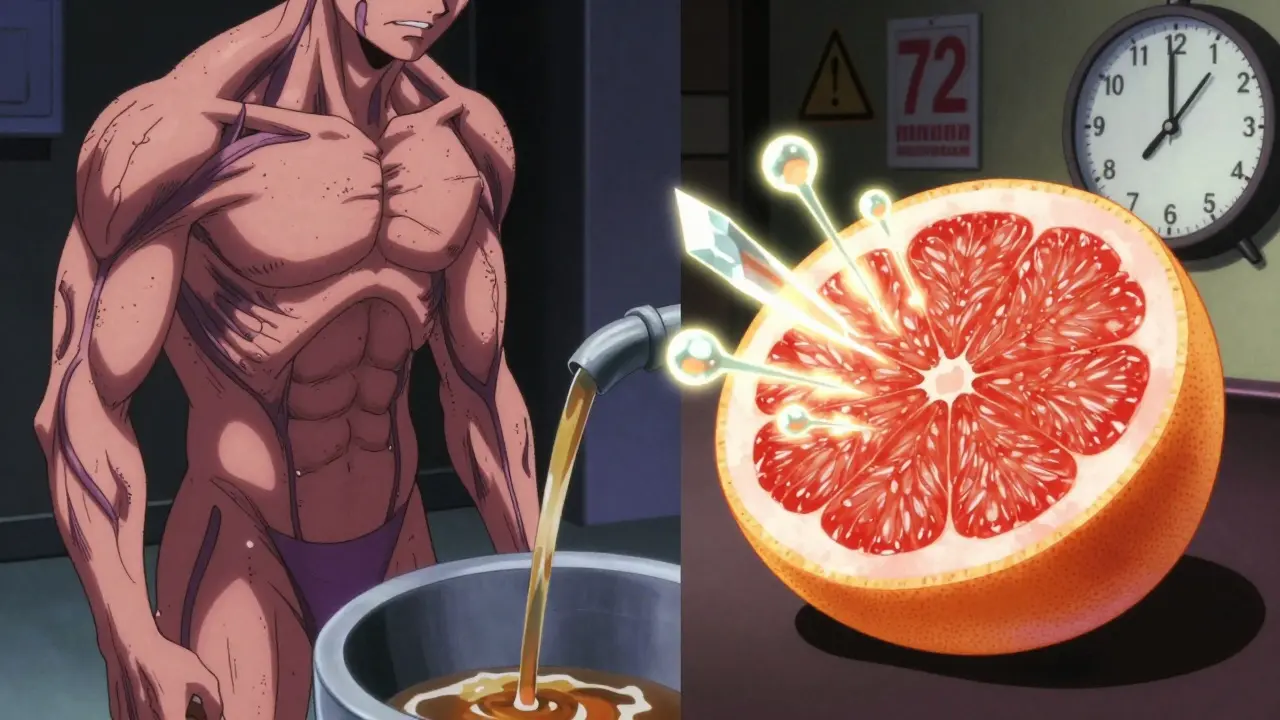
Grapefruit doesn’t make statins stronger on purpose. It just accidentally breaks a key system your body uses to control drug levels. That system is called the CYP3A4 enzyme. It’s found mostly in your small intestine and liver, and it’s responsible for breaking down about half of all medications you take by mouth - including some statins. When you drink grapefruit juice, compounds in it - called furanocoumarins - latch onto CYP3A4 and shut it down. Not temporarily. Not until the juice passes through. Permanently, at least for the next 24 to 72 hours. The enzyme can’t regenerate fast enough. So when your statin pill arrives, there’s no enzyme left to break it down. That means more of the drug enters your bloodstream than it should. This isn’t a small change. Studies show that drinking just one glass of grapefruit juice can triple or even quadruple the amount of certain statins in your blood. That’s like taking a 20 mg dose and getting the effect of 60 or 80 mg. And you didn’t even take more pills.Which Statins Are Affected?
Not all statins react the same way. The risk depends on how much they rely on CYP3A4 to be broken down.- High risk: Simvastatin (Zocor), lovastatin (Mevacor), and atorvastatin (Lipitor) are heavily processed by CYP3A4. Simvastatin shows the strongest reaction - studies found grapefruit juice can increase its levels by up to 3.6 times.
- Lower risk: Fluvastatin (Lescol), pravastatin (Pravachol), rosuvastatin (Crestor), and pitavastatin (Livalo) use different enzymes or barely need CYP3A4 at all. These are much safer to take with grapefruit.
What Happens When Statin Levels Get Too High?
The biggest danger isn’t liver damage or stomach upset. It’s your muscles. Higher statin levels can cause myalgia - muscle pain or weakness. That’s common enough on its own (affects 5-10% of users). But with grapefruit, that risk jumps. And in rare cases, it can spiral into rhabdomyolysis. Rhabdomyolysis is when muscle tissue breaks down so badly that it floods your bloodstream with a protein called myoglobin. Your kidneys can’t handle it. This can lead to kidney failure, electrolyte imbalances, and even death. It’s rare - about 1 in 200,000 people on statins get it. But when grapefruit is involved, case reports show the risk climbs. One documented case involved a 40-year-old woman who developed rhabdomyolysis after eating grapefruit daily for 10 days while taking simvastatin. Symptoms to watch for:- Unexplained muscle pain, tenderness, or weakness
- Dark, tea-colored urine
- Extreme fatigue
Timing Doesn’t Help - and Neither Does Juice vs. Fruit
Some people think, “I’ll just drink grapefruit juice in the morning and take my statin at night.” That won’t work. The enzyme inhibition lasts up to three days. One glass at breakfast can still affect your evening pill. And it doesn’t matter if it’s fresh fruit, juice, or extract. All forms contain the same furanocoumarins. Even grapefruit-flavored sodas or candies can have enough of the compound to cause problems. If it says “grapefruit” on the label, treat it like the real thing.What Should You Do?
If you’re on statins and love grapefruit, here’s what to do:- Check your statin name. Look at the prescription bottle. If it’s simvastatin or lovastatin, stop grapefruit completely.
- If you’re on atorvastatin, limit grapefruit to no more than one small glass (200 mL) per day - and no more than a few times a week.
- If you’re on pravastatin, rosuvastatin, fluvastatin, or pitavastatin, you’re likely safe with moderate amounts. Still, talk to your doctor before making any changes.
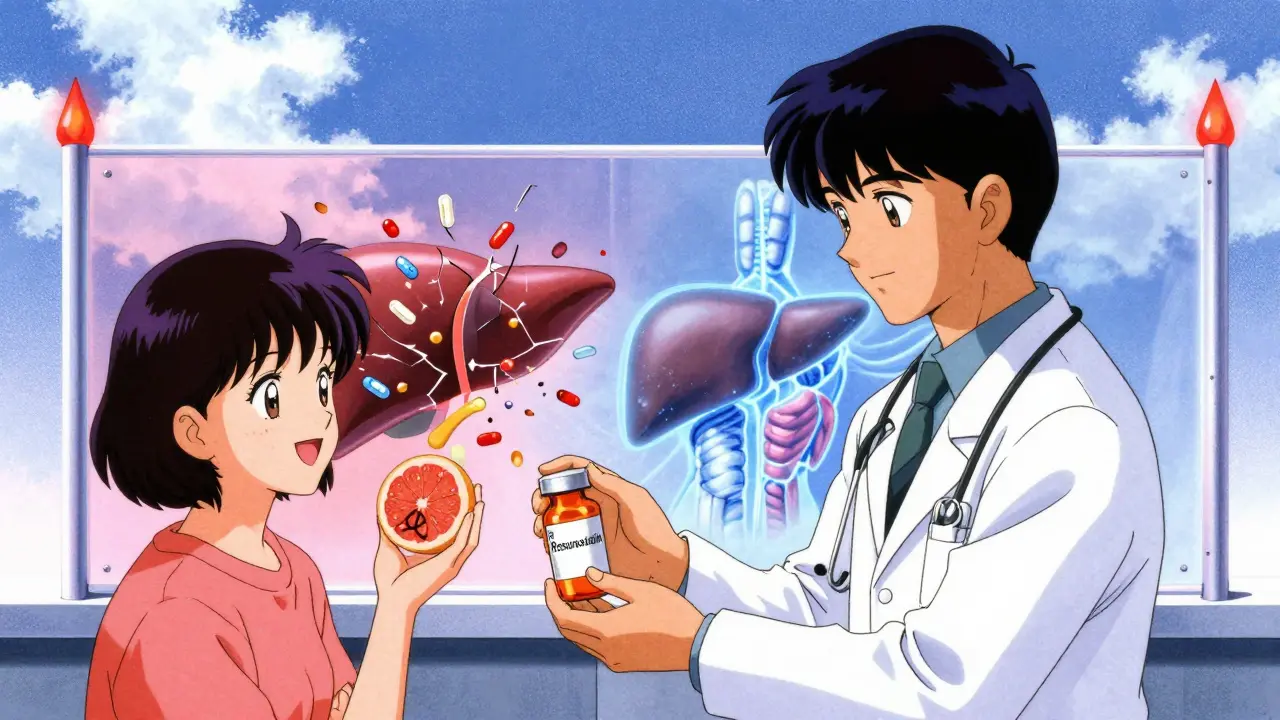
- Ask about switching. If you really can’t give up grapefruit, ask your doctor if you can switch to a statin that doesn’t interact. Rosuvastatin and pravastatin are common alternatives with similar effectiveness.
Why Do So Many People Still Ignore This Warning?
A 2021 survey found only 38% of statin users knew about the grapefruit risk - even though 67% of the medication labels warn about it. That’s a huge gap. Part of the problem? Doctors don’t always bring it up. Pharmacists do better - but not always. Patients assume “if it’s natural, it’s safe.” Or they think, “I’ve been drinking grapefruit juice for years and nothing happened.” But here’s the thing: the interaction is dose-dependent and cumulative. You might get away with it for months. Then one day, your body changes - maybe you’re older, maybe you’re on another medication, maybe your liver is a little slower - and suddenly, the same amount of grapefruit pushes you over the edge.What’s Being Done About It?
Researchers are exploring ways to fix the problem at the source. Scientists at the NIH are testing whether removing furanocoumarins from grapefruit could create a “safe” version. Early results show it’s possible - but the same compounds that cause the interaction also give grapefruit its antioxidant power. Take them out, and you lose some of the health benefits. The FDA is also reviewing whether to update labeling rules for all drugs affected by grapefruit - not just statins. That could mean clearer warnings on everything from blood pressure pills to anxiety meds.The Bigger Picture: Don’t Stop Your Statin
It’s tempting to panic and quit your statin if you love grapefruit. Don’t. Statins reduce heart attacks and strokes by 25-35% in people who need them. That’s life-saving. The risk of rhabdomyolysis from grapefruit is extremely low - especially if you’re on the right statin. The goal isn’t to eliminate grapefruit from your life. It’s to match your habits with your medication. If you’re on simvastatin and drink grapefruit juice daily, switching to rosuvastatin might be the smartest health decision you make this year. It’s not about fear. It’s about smart choices. Talk to your doctor. Get your statin checked. Ask if there’s a safer alternative. And if you’re not sure? Skip the grapefruit until you know for sure.Can I drink grapefruit juice if I take rosuvastatin?
Yes. Rosuvastatin (Crestor) is not broken down by the CYP3A4 enzyme, so grapefruit juice doesn’t significantly affect it. You can safely enjoy grapefruit in normal amounts while taking rosuvastatin. The same applies to pravastatin, fluvastatin, and pitavastatin.
Is it safe to eat grapefruit if I take atorvastatin?
You can, but limit it. The FDA says no more than one small glass (200 mL) of grapefruit juice per day. Eating a whole grapefruit or drinking more than that can raise atorvastatin levels by 2-3 times, increasing your risk of muscle side effects. Stick to the limit, or switch to a different statin if you love grapefruit.
Does timing matter - can I take my statin at night and drink grapefruit in the morning?
No. The enzyme-blocking effect of grapefruit lasts 24 to 72 hours. Even if you drink juice in the morning and take your statin at night, your body still won’t be able to break it down properly. You can’t outwait this interaction.
What are the signs of muscle damage from statins?
Watch for unexplained muscle pain, weakness, or tenderness - especially if it’s worse than normal after exercise. Dark or tea-colored urine is a red flag. Fatigue and swelling in muscles can also occur. If you notice these symptoms, stop grapefruit and contact your doctor immediately. Don’t wait for severe pain.
Can I switch from simvastatin to another statin if I want to keep eating grapefruit?
Yes. Many people switch from simvastatin or lovastatin to rosuvastatin or pravastatin because they don’t interact with grapefruit. These alternatives work just as well to lower cholesterol and carry lower risks for muscle side effects. Talk to your doctor - switching is often a simple, safe fix.
Ryan van Leent
December 18, 2025 AT 23:53Meenakshi Jaiswal
December 20, 2025 AT 05:13Dikshita Mehta
December 21, 2025 AT 18:19Kathryn Featherstone
December 22, 2025 AT 13:47Sahil jassy
December 23, 2025 AT 16:33Moses Odumbe
December 23, 2025 AT 22:16James Stearns
December 24, 2025 AT 10:14Anna Sedervay
December 26, 2025 AT 03:43pascal pantel
December 27, 2025 AT 01:19Dev Sawner
December 28, 2025 AT 03:08