
Medications to Avoid in Pregnancy: Teratogenic Risks and Safe Alternatives
 Jan, 12 2026
When you’re pregnant, every pill, drop, or supplement feels like a potential gamble. You want to feel better - whether it’s for a headache, an infection, or a chronic condition - but you’re terrified of hurting your baby. The truth is, some medications are dangerous during pregnancy, not because they’re always harmful, but because they can interfere with how your baby’s body forms. These are called teratogenic medications. And while most pregnancies happen without any medication exposure, about 1 in 16 women take something during early pregnancy that could pose a risk - often before they even know they’re pregnant.
When Your Baby Is Most at Risk
Your baby’s most vulnerable time isn’t when they’re big and kicking - it’s when they’re tiny, just starting to form. Weeks 3 to 8 after your last period are the critical window. That’s when the heart, brain, limbs, and organs are building themselves from scratch. If a teratogen hits during this time, it can cause major birth defects like missing fingers, a malformed heart, or a cleft palate. After week 9, the risk shifts. The baby’s body is mostly built, but organs are still maturing. Exposure now might affect brain development, growth, or cause problems like hearing loss or learning delays. That’s why timing matters as much as the drug itself.Medications That Are Definitely Risky
Some drugs are so clearly dangerous that doctors don’t even consider prescribing them to women who could get pregnant. These include:- Isotretinoin (Accutane) - Used for severe acne, this drug causes skull, heart, and brain defects. Even one dose can be enough. The iPLEDGE program requires two negative pregnancy tests, monthly counseling, and two forms of birth control - but still, 67 pregnancies occurred in 2022 among women enrolled.
- Warfarin (Coumadin) - This blood thinner can cause nasal deformities, eye problems, and developmental delays. It crosses the placenta easily. Low-molecular-weight heparin is the safe alternative for women who need anticoagulation.
- Thalidomide - Infamous for causing limb deformities in the 1950s and 60s, it’s still used today for leprosy and multiple myeloma. Pregnant women are strictly prohibited from using it.
- ACE inhibitors and ARBs - Commonly used for high blood pressure, these drugs can cause kidney damage, low amniotic fluid, and even fetal death. They’re off-limits after the first trimester.
- Statin drugs - Used to lower cholesterol, they interfere with fetal development of cell membranes and hormones. Discontinue before conception.
- Sulfamethoxazole/trimethoprim (Bactrim) - Can cause cleft lip, heart defects, and kernicterus (a dangerous type of jaundice) if taken after 32 weeks.
- Tetracyclines and fluoroquinolones - Antibiotics like doxycycline and ciprofloxacin can stain developing teeth and affect bone growth. Avoid entirely during pregnancy.
What About Common Pain Relievers?
You might think acetaminophen (Tylenol) is the only safe option - and you’re right. It’s the top choice for headaches, fever, or muscle aches throughout pregnancy. But NSAIDs like ibuprofen (Advil, Motrin) and naproxen (Aleve) are risky. Taking them after 20 weeks can cause low amniotic fluid and premature closure of a fetal blood vessel. Even before that, they’re not recommended unless a doctor says so. And aspirin? Avoid unless prescribed for specific conditions like preeclampsia. It increases bleeding risk and can affect the baby’s heart and lungs.What About Antibiotics and Allergy Meds?
Not all antibiotics are dangerous. Penicillin, amoxicillin, and cephalosporins are considered safe. But avoid tetracyclines and fluoroquinolones - they’re not worth the risk. For allergies, first-generation antihistamines like diphenhydramine (Benadryl) can cause drowsiness and may affect fetal movement. Second-generation options like loratadine (Claritin) and cetirizine (Zyrtec) are preferred. They don’t cross the placenta as easily and have better safety data. Antifungal creams like clotrimazole are safe for yeast infections. But oral antifungals like griseofulvin and ketoconazole? Avoid. Animal studies show birth defects, and human data is too limited to say they’re safe.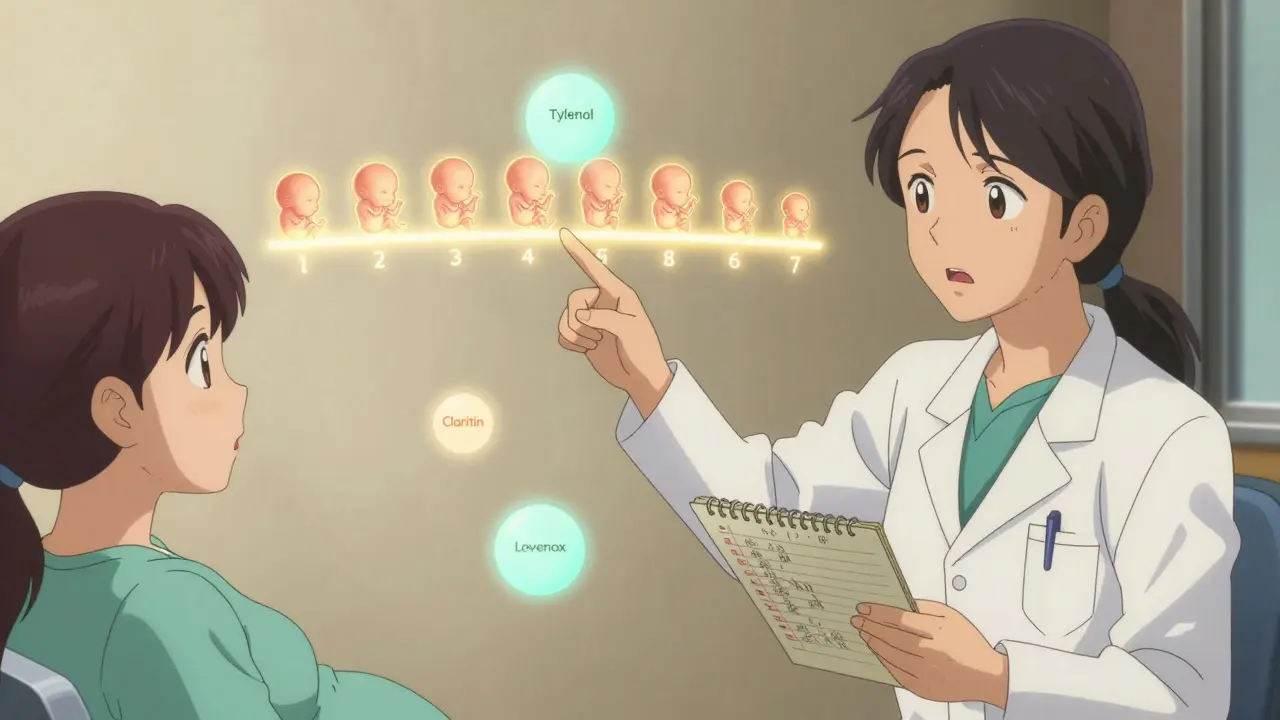
What About Mental Health and Seizure Medications?
This is where things get complicated. Stopping your antidepressant or seizure drug suddenly can be more dangerous than continuing it. For example, untreated epilepsy increases the chance of fetal injury from seizures by 10-15%. The teratogenic risk of most antiseizure drugs? Around 2-5%. So doctors often keep you on the lowest effective dose of lamotrigine or levetiracetam - both have better safety profiles than valproate, which carries a high risk of neural tube defects and autism. For depression and anxiety, SSRIs like sertraline and citalopram are generally considered safer than paroxetine (linked to heart defects) or MAOIs. But even these aren’t risk-free. The decision isn’t about eliminating risk - it’s about minimizing it while keeping you stable.Safe Alternatives You Can Trust
Here’s what you can use instead:- Pain/fever: Acetaminophen (Tylenol) - safe in all trimesters.
- Allergies: Loratadine (Claritin), cetirizine (Zyrtec), chlorpheniramine.
- Heartburn: Antacids like Tums, calcium carbonate, or magnesium hydroxide. Avoid bismuth subsalicylate (Pepto-Bismol) - it contains aspirin-like compounds.
- Constipation: Fiber supplements, stool softeners like docusate sodium.
- UTIs: Nitrofurantoin is generally safe before 36 weeks. Amoxicillin or cephalexin are good alternatives.
- Blood thinning: Low-molecular-weight heparin (Lovenox, Clexane) instead of warfarin.
- High blood pressure: Methyldopa, labetalol, or nifedipine. Avoid ACE inhibitors and ARBs.
- Thyroid issues: Propylthiouracil (PTU) in the first trimester, then switch to methimazole. Both require careful monitoring.
What You Should Do Before and During Pregnancy
The best way to avoid teratogenic risks? Plan ahead.- If you’re thinking about getting pregnant, schedule a preconception visit. Review every medication - prescription, over-the-counter, and herbal. Even ‘natural’ supplements can be risky.
- Don’t wait until you miss your period. Many exposures happen before you know you’re pregnant. A 2023 study found 72% of teratogenic exposures occurred before prenatal care started.
- Keep a list: Name, dose, why you take it, and when you last took it. Bring it to every appointment.
- Use the BabyMed app (launched January 2024). It gives real-time risk assessments based on your gestational age and medication, with 94.7% accuracy compared to specialist consultations.
- Never stop a chronic medication without talking to your doctor. Abruptly stopping epilepsy, hypertension, or mental health meds can be life-threatening for you and your baby.

The Bigger Picture
It’s easy to panic and assume every medication is dangerous. But here’s what most people don’t realize: only about 2-3% of birth defects are caused by medications. Most are from genetic factors, environmental exposures, or unknown causes. Still, when a medication is known to be harmful, the risk isn’t worth taking. New research is making things safer. A February 2024 study in the New England Journal of Medicine found that switching from regular prednisone to a modified-release version taken at bedtime cut major birth defects by 73% in women with autoimmune diseases. That’s huge. The FDA is also updating its pregnancy risk tracking system to pull data from electronic health records - meaning we’ll learn faster when new drugs become risky.Final Thought: You’re Not Alone
You’re not careless for needing medication. You’re not selfish for wanting to feel better. The goal isn’t to avoid all drugs - it’s to avoid the wrong ones at the wrong time. With the right information, the right provider, and the right timing, you can manage your health and give your baby the best possible start.Can I take ibuprofen while pregnant?
Avoid ibuprofen and other NSAIDs after 20 weeks of pregnancy - they can cause low amniotic fluid and heart problems in the baby. Even earlier in pregnancy, acetaminophen is preferred for pain relief. If you took ibuprofen before knowing you were pregnant, don’t panic. A single dose is unlikely to cause harm, but talk to your doctor to assess your risk.
Is it safe to use acne treatments during pregnancy?
No - avoid oral isotretinoin (Accutane) entirely. Even topical retinoids like tretinoin should be avoided because they’re absorbed through the skin. Use gentle cleansers, benzoyl peroxide (in low doses), or azelaic acid instead. Always check with your OB-GYN before using any acne product.
What if I took a risky medication before I knew I was pregnant?
Many women do. The key is timing. If you took the medication before week 3, it’s usually all-or-nothing - either the embryo wasn’t affected, or it didn’t survive. After week 3, the risk depends on the drug and dose. Call your doctor or a teratology specialist (like those at OTIS) for a personalized risk assessment. Don’t assume the worst - most exposures don’t lead to birth defects.
Are herbal supplements safe during pregnancy?
Not necessarily. Many herbs aren’t tested for safety in pregnancy. Black cohosh, goldenseal, and dong quai can cause contractions or hormonal changes. Even common ones like ginger (in high doses) or echinacea carry unknown risks. Stick to prenatal vitamins and avoid supplements unless your doctor approves them.
Can I continue my antidepressants during pregnancy?
It depends. Untreated depression can increase risks like preterm birth and low birth weight. Medications like sertraline and citalopram are considered low-risk options. Never stop suddenly - it can trigger withdrawal or relapse. Work with your psychiatrist and OB-GYN to find the safest dose and monitor your mental health closely.
Is it safe to take prenatal vitamins with extra iron or folic acid?
Yes - prenatal vitamins are designed for pregnancy. Folic acid (at least 400 mcg daily) reduces neural tube defects by up to 70%. Iron supports blood volume expansion. Choose a brand with these key nutrients. Avoid high-dose vitamin A supplements - over 10,000 IU can be teratogenic.
Lance Nickie
January 14, 2026 AT 02:38Clay .Haeber
January 15, 2026 AT 19:57Also, why is the FDA still using 1980s risk categories? We have real data now. This article reads like a CDC pamphlet written by a parrot.
Nelly Oruko
January 17, 2026 AT 19:04Angel Tiestos lopez
January 17, 2026 AT 19:37Scottie Baker
January 19, 2026 AT 11:05Anny Kaettano
January 20, 2026 AT 19:19Kimberly Mitchell
January 22, 2026 AT 13:50Diana Campos Ortiz
January 23, 2026 AT 19:08Jesse Ibarra
January 24, 2026 AT 07:02laura Drever
January 24, 2026 AT 22:34Rosalee Vanness
January 26, 2026 AT 16:59mike swinchoski
January 28, 2026 AT 06:00Damario Brown
January 29, 2026 AT 05:30Priyanka Kumari
January 29, 2026 AT 08:05Avneet Singh
January 30, 2026 AT 17:28