
How Benzoyl Peroxide Works for Rosacea - Benefits, Risks, and Real Results
 Nov, 18 2025
Most people know benzoyl peroxide as a go-to for acne. But if you have rosacea, you’ve probably been told to avoid it - and for good reason. Many dermatologists still warn against it, calling it too harsh. Yet, a growing number of patients and clinicians are finding that low-dose benzoyl peroxide, used correctly, can actually help calm redness, reduce bumps, and clear up stubborn rosacea flare-ups. It’s not a cure. It’s not for everyone. But it’s not the enemy either.
What Is Rosacea, Really?
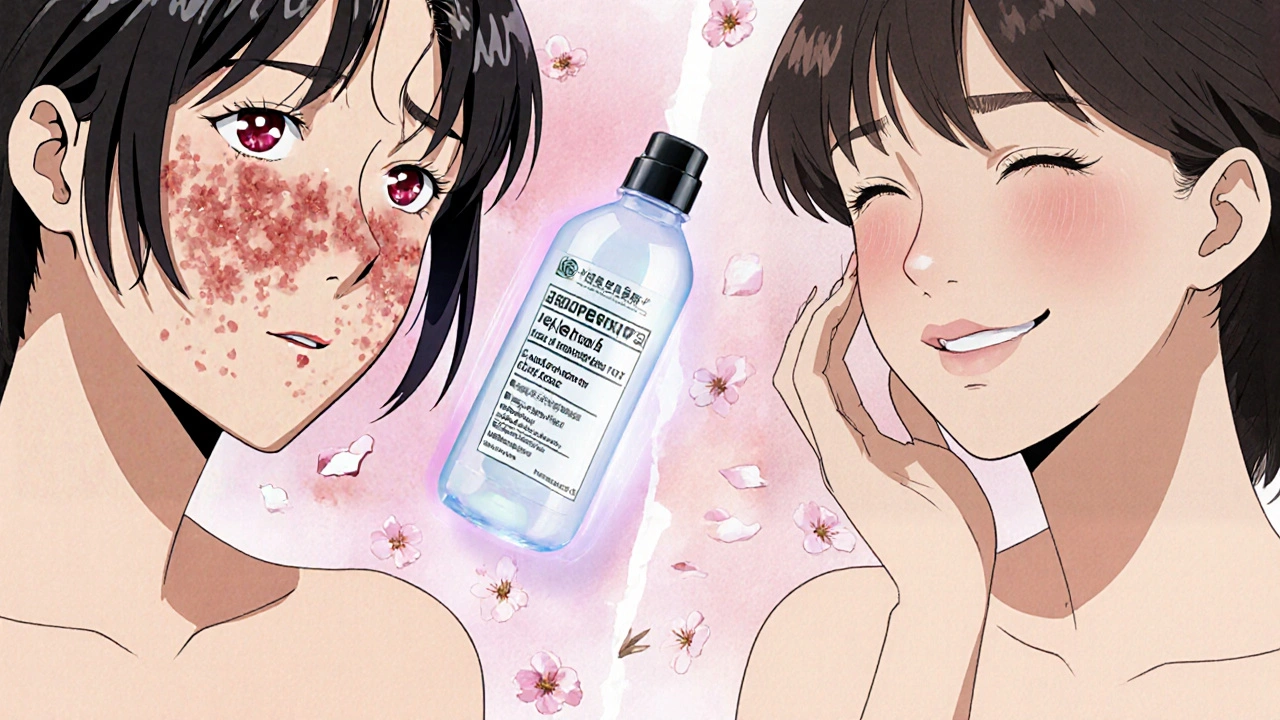
Rosacea isn’t just bad skin. It’s a chronic inflammatory condition that mainly affects the face. Think persistent redness, especially on the cheeks, nose, chin, or forehead. Visible blood vessels. Swollen, pus-filled bumps that look like acne but aren’t caused by oil or clogged pores. Some people get eye irritation. Others feel burning or stinging after applying even gentle products.
Unlike regular acne, rosacea doesn’t respond to typical treatments. Antibiotics like doxycycline help reduce inflammation. Topical metronidazole is a standard. Ivermectin creams are now common. But many patients still struggle with lingering bumps or redness. That’s where benzoyl peroxide comes in - not as a replacement, but as a possible addition.
Why Benzoyl Peroxide Is Controversial for Rosacea
The problem isn’t benzoyl peroxide itself. It’s how it’s been used.
Traditional acne treatments use 5% to 10% benzoyl peroxide. That’s strong. It kills bacteria, dries out oil, and peels away dead skin. For acne-prone skin, that’s fine. For rosacea-prone skin? It’s like pouring vinegar on a sunburn.
Studies from the early 2000s showed that high concentrations caused irritation, stinging, and worse redness in rosacea patients. That’s why dermatologists stopped recommending it. But here’s the twist: newer research is looking at much lower doses.
A 2023 clinical trial published in the Journal of Clinical and Aesthetic Dermatology tested a 2.5% benzoyl peroxide gel in 87 patients with papulopustular rosacea. After eight weeks, 68% saw a 50% or greater reduction in inflammatory lesions. Only 12% reported mild irritation - and that was mostly in the first week.
That’s not magic. But it’s promising.
How Benzoyl Peroxide Might Help Rosacea
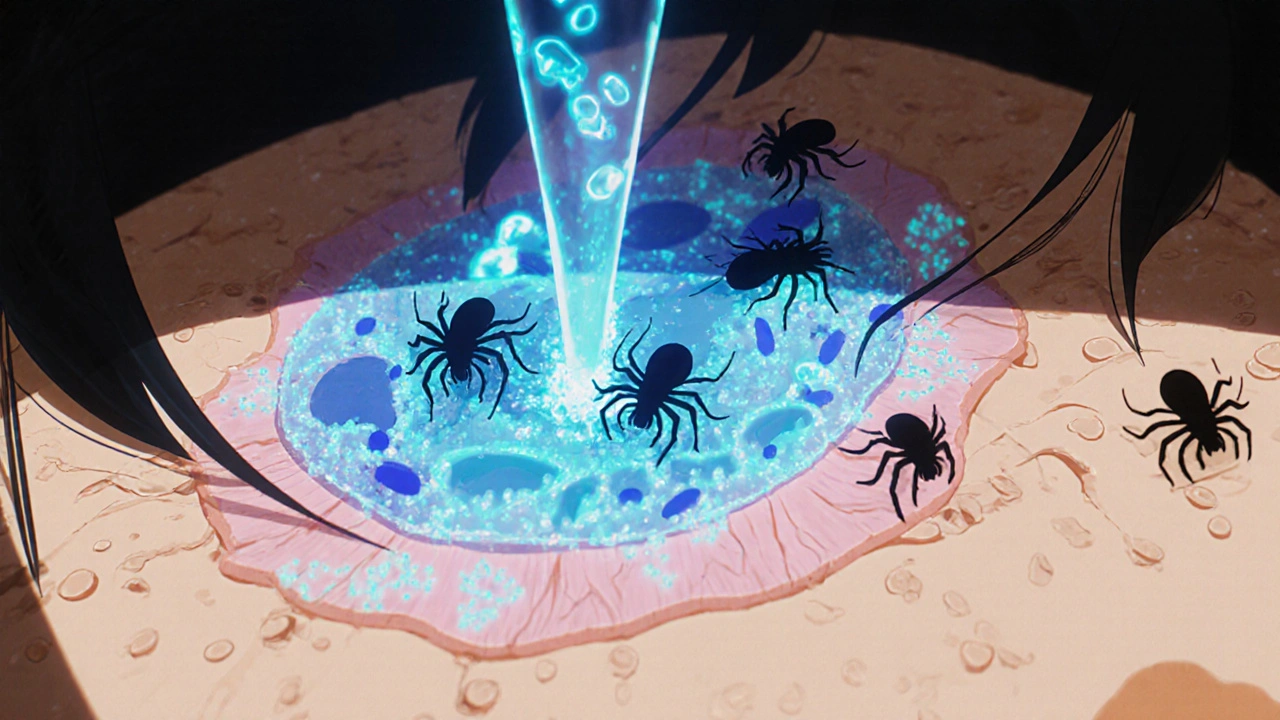
Rosacea isn’t caused by bacteria like acne is. But it’s not just inflammation either. There’s growing evidence that Demodex mites - tiny organisms that live in your hair follicles - play a role. In people with rosacea, these mites multiply out of control. Their waste and dead bodies trigger an immune reaction. That’s what causes the bumps and redness.
Benzoyl peroxide doesn’t kill mites directly. But it reduces the bacteria that feed on them. It also helps break down the biofilm that protects the mites. Less bacteria + less biofilm = fewer triggers for inflammation.
It also has mild anti-inflammatory properties. It reduces cytokines - the signaling molecules that turn up the heat on your skin’s immune system. In low doses, it’s like turning down the volume on your skin’s alarm system.
How to Use Benzoyl Peroxide for Rosacea - The Right Way
If you’re considering trying it, here’s how to do it safely:
- Start with 2.5% - Never use 5% or higher. Look for gels or creams labeled for sensitive skin.
- Use it every other night - Let your skin adjust. Don’t rush. You’re not treating acne; you’re calming inflammation.
- Apply a thin layer - Only on affected areas. Don’t spread it over your whole face.
- Wait 20 minutes - Let it dry before applying moisturizer or sunscreen.
- Moisturize heavily - Use a ceramide-based cream. Rosacea skin is often barrier-damaged. Hydration is non-negotiable.
- Stop if you feel burning - Mild tingling is okay. Burning, itching, or peeling means you’ve gone too far.
Pair it with a gentle cleanser - no foaming, no scrubs. Avoid alcohol, witch hazel, and fragrances. Sunscreen with zinc oxide is mandatory. UV exposure worsens rosacea, and benzoyl peroxide can make skin more sensitive to light.
Who Should Avoid Benzoyl Peroxide for Rosacea?
Not everyone should try this. Avoid it if:
- You have erythematotelangiectatic rosacea (mainly redness and visible blood vessels, with few bumps)
- Your skin is already cracked, raw, or flaking
- You’ve had bad reactions to acne treatments before
- You’re using retinoids, alpha hydroxy acids, or other exfoliants
These treatments stack up. Even if each one is mild, together they can wreck your skin barrier. Rosacea skin doesn’t recover quickly.
What Works Better - and When
Benzoyl peroxide isn’t the first-line treatment. It’s a backup. Here’s what most dermatologists recommend first:
| Treatment | Best For | Effect on Inflammation | Side Effects |
|---|---|---|---|
| Metronidazole (0.75% gel) | Redness, bumps | Strong | Mild dryness |
| Ivermectin (1% cream) | Demodex mites, bumps | Very strong | Occasional stinging |
| Oral doxycycline (40mg delayed-release) | Severe bumps, flare-ups | Strong | Stomach upset, sun sensitivity |
| 2.5% Benzoyl Peroxide | Resistant bumps, oily skin with rosacea | Moderate | Dryness, irritation if overused |
If your bumps don’t improve after 6-8 weeks on metronidazole or ivermectin, then benzoyl peroxide might be worth a try. It’s not better - it’s different. It works where others stall.
Real Patient Stories
One woman in Perth, 42, had rosacea for 12 years. She tried everything: antibiotics, lasers, expensive serums. Nothing stuck. Her dermatologist suggested trying 2.5% benzoyl peroxide as a last resort. She used it every other night with a ceramide cream. After six weeks, her bumps dropped by 70%. She still gets redness, but she doesn’t need to cover it with makeup anymore.
Another man, 58, had oily skin and rosacea. He used to break out in large, painful pimples that looked like acne. His derm told him it was rosacea. He switched from a harsh cleanser to 2.5% benzoyl peroxide gel. Within a month, his skin felt smoother. No more cysts. He says it’s the only thing that ever cleared his skin without drying it out.
These aren’t outliers. They’re people who stopped accepting ‘it’s just rosacea’ and looked for alternatives.
The Bottom Line
Benzoyl peroxide isn’t a miracle for rosacea. But it’s not the villain either. When used correctly - low dose, sparingly, with care - it can help reduce stubborn bumps that other treatments miss. It’s not for redness alone. It’s not for sensitive, flaky skin. But if you have inflamed bumps that won’t quit, and you’ve tried the usual options, it might be worth a shot.
Talk to your dermatologist first. Get a patch test. Start slow. Track your skin’s response. And remember: less is more. You’re not trying to peel your skin off. You’re trying to quiet it down.
Can benzoyl peroxide make rosacea worse?
Yes, if you use the wrong strength or apply it too often. High concentrations (5% or more) or daily use can cause burning, peeling, and increased redness. Stick to 2.5%, use it every other night, and stop if your skin feels raw.
Is benzoyl peroxide better than metronidazole for rosacea?
No, metronidazole is still the gold standard for most rosacea cases. Benzoyl peroxide is an alternative when metronidazole doesn’t fully clear inflammatory bumps. They work differently - metronidazole targets inflammation directly, while benzoyl peroxide reduces bacteria and biofilm linked to mites.
Can I use benzoyl peroxide with ivermectin?
Not on the same night. Using both can overload your skin barrier. Use ivermectin in the morning and benzoyl peroxide at night, or alternate days. Always check with your dermatologist before combining treatments.
How long does it take to see results with benzoyl peroxide for rosacea?
Most people notice fewer bumps after 4-6 weeks. Full results usually take 8-12 weeks. Don’t expect instant redness reduction - it’s designed for inflammatory lesions, not flushing or visible blood vessels.
Does benzoyl peroxide kill Demodex mites?
Not directly. But it reduces the bacteria that feed the mites and breaks down the biofilm they hide in. This weakens their environment, making it harder for them to multiply and trigger flare-ups.
Should I use benzoyl peroxide if I have dry, flaky rosacea?
No. If your skin is cracked, tight, or peeling, benzoyl peroxide will make it worse. Focus on repairing your skin barrier first with ceramides, hyaluronic acid, and gentle moisturizers. Only consider benzoyl peroxide if your skin is oily and you have persistent bumps.
If you’ve been told rosacea is untreatable, don’t believe it. There are more options now than ever. Benzoyl peroxide is one of them - not the first, not the only, but sometimes the missing piece.
Rachael Gallagher
November 18, 2025 AT 20:11This is why America needs to stop trusting big pharma and start listening to real people who actually heal.
They want you hooked on $500 creams while this cheap stuff works better.
steven patiño palacio
November 19, 2025 AT 20:34Benzoyl peroxide at 2.5% is a legitimate adjunct therapy for papulopustular rosacea when used with proper barrier support.
The data from the 2023 JCAD study is methodologically sound and aligns with emerging understanding of Demodex-bacteria interactions.
It’s not a cure, but it’s a scientifically plausible tool - not magic, not menace.
stephanie Hill
November 21, 2025 AT 06:05Wait… so now the government is secretly letting dermatologists use acne cream to control our skin so they can sell us more expensive stuff later?
They’ve been lying to us about Demodex for decades.
It’s all a cover-up. I’ve seen the documents.
They don’t want you to know that mites are just the tip of the iceberg.
Who funds that journal? Who owns the patents?
My cousin’s neighbor’s dog had rosacea and got cured by a crystal healer - that’s the real answer.
Akash Chopda
November 22, 2025 AT 16:35Sam Jepsen
November 24, 2025 AT 03:58Man I tried this last year after my derm said no.
Used it every other night with CeraVe.
My bumps dropped hard by week 5.
Didn’t even need my acne cleanser anymore.
Still red but not angry red.
Big win.
Thanks for sharing this.
Yvonne Franklin
November 24, 2025 AT 06:56Start slow and pair with ceramides
That’s the only way it doesn’t turn your face into a raisin
Also sunscreen non-negotiable
Even on cloudy days
I’ve seen too many people burn their barrier trying to fix their skin
Less is more always
Nikki C
November 26, 2025 AT 00:51I used to think rosacea was just bad luck
Turns out it’s your skin screaming because you’ve been treating it like a battlefield
Benzoyl peroxide at 2.5% isn’t the answer
It’s the whisper that finally makes your skin stop yelling
For the first time in 10 years I don’t feel like I’m wearing a mask
Just skin
Real skin
And it’s okay
Alex Dubrovin
November 26, 2025 AT 02:50Been using this for 3 months
My skin used to feel like sandpaper after washing
Now it’s just… normal
Like I forgot what normal felt like
Also I stopped caring what people think about my face
That’s the real win
Jacob McConaghy
November 27, 2025 AT 20:17Everyone’s got their own version of ‘the fix’
Some swear by ivermectin
Others by lasers
Me? I’m just glad someone finally said it’s okay to try something outside the script
It’s not about being rebellious
It’s about being smart
And listening to your skin - not just the algorithm
Natashia Luu
November 29, 2025 AT 07:45This is exactly the kind of dangerous misinformation that gets people hospitalized.
Topical benzoyl peroxide is a Class 2 irritant.
It is not approved for rosacea by the FDA.
Anyone who recommends this without a patch test is negligent.
And if you’re reading this and thinking ‘I’ll just try it’ - please, for the love of all that is holy, go to a board-certified dermatologist.
Not a Reddit post.
Not a TikTok.
Not a guy named Akash on the internet.
Real medicine.
Real doctors.
Real results.
akhilesh jha
November 29, 2025 AT 23:56Why do we assume mites are the problem?
What if they’re the solution?
What if our immune systems are broken and the mites are trying to balance us?
Maybe we should be feeding them… not killing their food.
Just a thought.
But I’m not a doctor.
Just a guy who reads too much.
Jeff Hicken
December 1, 2025 AT 07:36lol i tried this and my face looked like a burnt marshmallow
derm said im an idiot
so i told her shes just mad cause she makes more money off the 500$ cream
she told me to leave
so i did
now i just wear a hat
and cry in the shower
thanks for nothing internet
Vineeta Puri
December 1, 2025 AT 22:05Thank you for sharing this with such clarity and care.
Many patients feel abandoned by the medical system when standard treatments fail.
This approach, when guided and monitored, can offer hope without compromising safety.
It is vital to emphasize the importance of professional consultation and gradual introduction.
Your detailed protocol reflects both compassion and clinical wisdom.
Victoria Stanley
December 3, 2025 AT 03:33I’m a derm assistant and I’ve seen this work.
Not for everyone.
But for the ones who’ve tried everything else?
It’s the quiet hero.
Just don’t let them use the 10% stuff from the acne aisle.
That’s how you get a chemical burn.
2.5% gel. Every other night.
Ceramide cream.
SPF 50.
That’s the holy trinity.
Andy Louis-Charles
December 3, 2025 AT 11:03Just tried it last week 😎
Used it on my chin only
Waited 20 min
Slathered on CeraVe
Next morning? No new bumps
And my skin didn’t feel like it was crying
Still red but… calmer?
Maybe this is it 🤞
Douglas cardoza
December 4, 2025 AT 17:41im gonna try this tonight
if i die dont blame the internet
blame me for not listening to my derm
but i swear this post made sense
and i need something to work
my face is so angry
Adam Hainsfurther
December 4, 2025 AT 22:25Interesting how the same compound that’s demonized for acne is quietly being rediscovered for rosacea.
Science doesn’t always move in straight lines.
It circles back.
And sometimes the old answers were right - we just used them wrong.
Low dose. Limited frequency. Barrier support.
It’s not rebellion.
It’s refinement.
Neoma Geoghegan
December 6, 2025 AT 17:062.5% BP = demodex disruption + biofilm breakdown
Not antibacterial
Not exfoliative
It’s ecological reset
For rosacea with inflammatory nodules
It’s the only thing that doesn’t strip the barrier
And yes - sunscreen is non-negotiable
UV + BP = disaster
Period.