
Glaucoma: Understanding Elevated Eye Pressure and Optic Nerve Damage
 Jan, 20 2026
Glaucoma doesn’t come with pain, blurry vision, or warning signs-until it’s too late. By the time most people notice something’s wrong, they’ve already lost up to 40% of their vision. This isn’t a sudden accident. It’s a slow, silent thief that attacks the optic nerve, often while you’re reading, watching TV, or driving. And the main trigger? Elevated eye pressure. But here’s the twist: not everyone with high pressure gets glaucoma, and some with perfectly normal pressure still lose their sight. So what’s really going on inside your eye?
What Exactly Is Glaucoma?
Glaucoma isn’t just high eye pressure. It’s damage to the optic nerve-the cable that sends visual information from your eye to your brain. When that nerve dies, the vision it carried is gone forever. The damage usually starts at the edges of your vision, so you don’t notice it. By the time you see shadows or bump into things, the nerve cells are already dead. And unlike cataracts, you can’t fix it with surgery. Once gone, it doesn’t come back.
The key player is intraocular pressure (IOP)-the fluid pressure inside your eye. Normal IOP sits between 10 and 21 mmHg. But pressure alone doesn’t tell the whole story. Some people have pressures of 25 mmHg and never develop damage. Others have pressures of 14 mmHg and still lose vision. Why? Because glaucoma isn’t just about pressure. It’s about how your optic nerve handles it.
The Optic Nerve Under Stress
At the back of your eye, the optic nerve passes through a sponge-like structure called the lamina cribrosa. Think of it like a sieve holding the nerve fibers together. When pressure builds up inside your eye, this sieve gets pushed backward. In healthy eyes, it bends a little and bounces back. In glaucoma, it doesn’t recover. Studies using advanced imaging show that glaucoma patients have 30-50% more backward movement of this structure than healthy people.
This strain crushes the tiny axons-long threads that carry signals from your retina to your brain. These axons don’t heal. They die. And when enough of them go, you lose vision. The process is slow, but relentless. Each year, a person with untreated glaucoma loses about 1-2% of their optic nerve fibers. That might not sound like much, but over 10 years, it’s 10-20%. And once it’s gone, it’s gone for good.
Not All Glaucoma Is the Same
There are different types, and they behave differently. The most common is primary open-angle glaucoma (POAG). It accounts for about 90% of cases in the U.S. and develops slowly, with no symptoms. Your eye’s drainage system just gets clogged over time, and pressure creeps up.
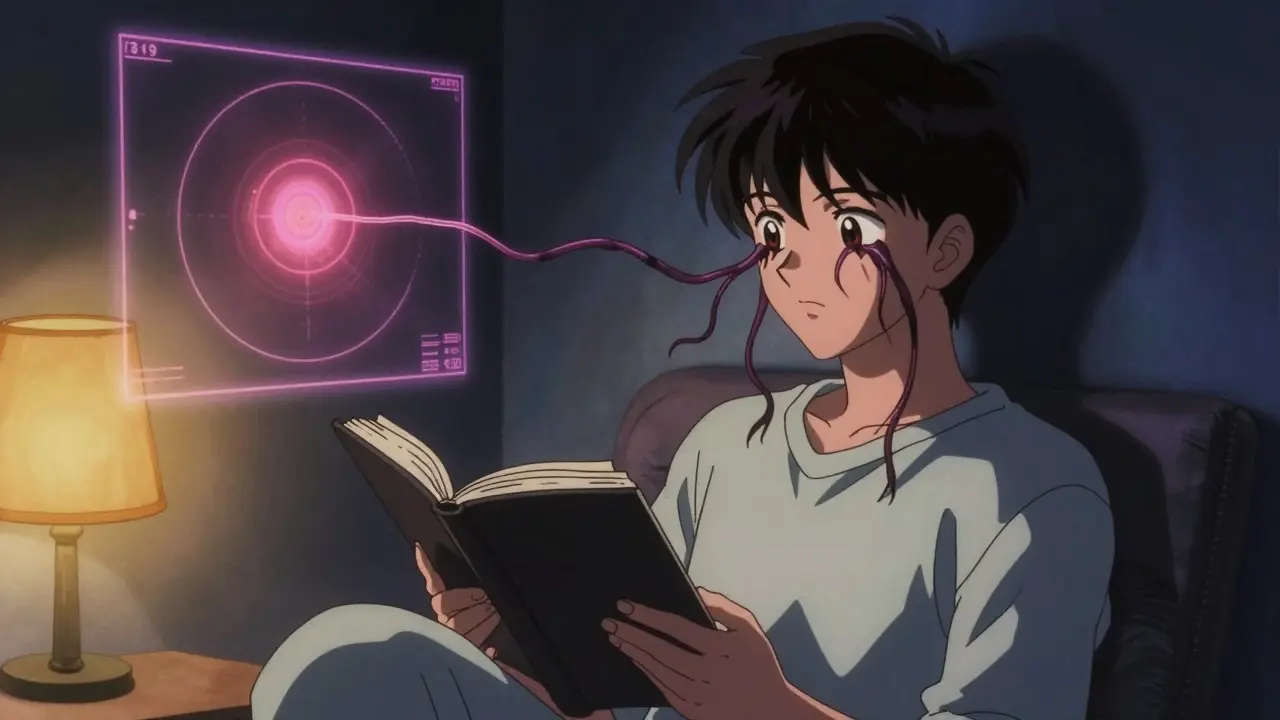
Then there’s normal-tension glaucoma (NTG). This is the confusing one. Your IOP is perfectly normal-12, 13, even 15 mmHg-but your optic nerve still dies. Why? Research shows it might not be the pressure itself, but the pressure difference between your eye and your brain. Your cerebrospinal fluid (CSF) pressure, which supports the back of the optic nerve, is often lower in NTG patients. That means even normal eye pressure becomes too much when the pressure from behind drops. One study found NTG patients had an average CSF pressure of 9.7 mmHg, while healthy people had 13.7 mmHg. That 4 mmHg difference? That’s enough to damage the nerve.
There’s also angle-closure glaucoma, which is rarer but more dangerous. It happens when the iris blocks the drainage angle suddenly, causing pressure to spike fast. This can cause severe pain, nausea, and sudden vision loss. It’s an emergency. And in Asia, it’s responsible for half of all glaucoma blindness.
How Do Doctors Know You Have It?
There’s no single test. It’s a puzzle made of three pieces: pressure, nerve damage, and vision loss.
- Eye pressure is measured with a device called a Goldmann tonometer. It’s the gold standard. But pressure changes throughout the day-usually highest in the morning. That’s why one reading isn’t enough.
- Optic nerve imaging uses OCT (optical coherence tomography). This machine takes a 3D scan of your optic nerve and measures the thickness of the nerve fiber layer. It can detect thinning as small as 5-10 microns-that’s thinner than a human hair. If your nerve is losing thickness over time, that’s a red flag.
- Visual field tests map your peripheral vision. You sit in front of a machine, stare at a dot, and press a button when you see a flash. It’s boring, but it finds blind spots you didn’t know you had. A 1 dB drop in sensitivity can mean early damage.
Doctors don’t just look at one test. They track changes over time. A single high reading? Could be stress or caffeine. A thinning nerve that keeps getting thinner? That’s glaucoma.
Treatment: Lowering Pressure, Saving Vision
The goal? Reduce pressure enough to stop the nerve from dying. Studies show lowering IOP by 30% cuts progression risk in half. That’s huge.
First-line treatment? Eye drops. Prostaglandin analogs like latanoprost are the most effective. They lower pressure by 25-33% with just one drop a night. But they come with side effects: longer eyelashes, darker eyelids, sunken eyes. Some people stop taking them because they don’t like how they look.
If drops don’t work, laser treatment is next. Selective laser trabeculoplasty (SLT) opens up the drainage system. It works for 75% of people, but its effect fades over time-about 10% per year. Surgery is the last step. Trabeculectomy creates a new drainage channel. It’s successful in 85-90% of cases after one year, but many need additional treatments later.
For milder cases, new micro-invasive glaucoma surgeries (MIGS) like iStent are gaining ground. They’re safer than traditional surgery, with fewer complications. They reduce pressure by 20-25%, which is enough for early-stage glaucoma.
The Hard Truth About Adherence
Here’s the biggest problem: people stop taking their drops. Half quit within a year. Only one in four are still using them after two years. Why? Side effects, forgetfulness, or thinking, “I feel fine, so I don’t need it.” But glaucoma doesn’t hurt. That’s why it kills vision. If your pressure is low today, it won’t stay that way without treatment.
Patients in forums like Reddit share stories of NTG progression despite IOP below 15 mmHg. One user wrote: “My vision keeps getting worse even though my pressure is 12-13.” That’s why doctors now look beyond pressure. They check for other factors: blood flow, inflammation, even genetics.
What’s Next? Beyond Pressure
Scientists are no longer just trying to lower pressure. They’re trying to save the nerve itself.
One promising area is neuroprotection. The drug brimonidine, used in some glaucoma drops, may protect nerve cells even without lowering pressure. In the LIBERTI study, NTG patients on brimonidine had 30% slower vision loss than those on timolol.
Other experiments are even wilder. Researchers are testing oncomodulin-a protein that helps nerves regrow in animals. In lab mice, it caused 40% of damaged optic nerve fibers to regenerate. It’s early, but it’s hope.
Gene therapy is also in trials. One approach targets the eye’s drainage system to make it work better naturally. Early results show 25% IOP reduction after six months. Stem cell therapies aim to replace dead nerve cells. None are ready yet, but the direction is clear: we’re moving from just managing pressure to actually saving the nerve.
Who’s at Risk?
You’re more likely to get glaucoma if you’re:
- Over 60 (risk jumps to 12.6% after 80)
- Black, Hispanic, or Asian (higher rates of certain types)
- Have a family history of glaucoma
- Have diabetes, high blood pressure, or severe nearsightedness
- Have used steroids for a long time
And here’s the kicker: if you’re over 40, you should get a comprehensive eye exam every 2 years-even if you see perfectly. Glaucoma doesn’t wait for symptoms.
The Cost of Waiting
Glaucoma affects 76 million people worldwide today. By 2040, that number will hit 112 million. It’s the second leading cause of blindness globally. The cost of treatment? Around $1,200-$1,800 a year for drops. Surgery? $2,500-$5,000 per eye. But the cost of blindness? It’s not just money. It’s independence. It’s driving. It’s reading your grandchild’s face. It’s walking without fear of falling.
Early detection saves vision. Not all of it-but enough to keep you living your life. That’s why regular eye exams aren’t optional. They’re essential.
Ben McKibbin
January 22, 2026 AT 05:53Glaucoma is the silent assassin of vision-and the scariest part? It doesn’t care if you’re healthy, young, or ‘just stressed.’ I had a friend with normal pressure who lost half her sight by 50. No family history. No diabetes. Just a slow, silent bleed in her optic nerve. OCT scans showed thinning before she noticed a single blind spot. Doctors call it ‘normal-tension glaucoma’ like it’s some minor footnote. It’s not. It’s a biological betrayal.
Rod Wheatley
January 23, 2026 AT 14:31Hey everyone-just wanted to share something real. My mom’s been on latanoprost for 8 years. She hates the dark eyelids and the weird lash growth, but she refuses to quit because she remembers what it was like when she started losing peripheral vision. She sees her grandkids’ faces clearly. That’s worth the side effects. Also, if you’re over 40, get that OCT scan. It’s not a luxury-it’s insurance for your future self. And yes, it’s boring. So is brushing your teeth. But you do it anyway.
Jarrod Flesch
January 24, 2026 AT 00:14Just had my first glaucoma screening last week 😅 Turns out I’ve got borderline IOP (22) but no nerve damage yet. My doc said, ‘You’re lucky-you caught it early.’ I thought I was fine because I can read my phone fine. Turns out, I can’t see the curb when I walk anymore. Weird, right? Anyway, starting drops tomorrow. Fingers crossed. Also, anyone else notice how the drops make your eyes look kinda… dead? Like, no sparkle? 😅
Amber Lane
January 24, 2026 AT 16:46My grandma lost her vision to glaucoma. She never complained. Just kept knitting. Until she couldn’t see the needles anymore.
Barbara Mahone
January 25, 2026 AT 05:26I’m Indian, and my family never talked about eye health until my uncle went blind. Now my mom makes me get checked every year. She says, ‘Eyes don’t scream-they whisper. You have to listen.’ I didn’t understand until I saw my OCT scan. My nerve fiber layer was already thinning. I started drops last month. No symptoms. Just fear. And now, a little hope.
shubham rathee
January 26, 2026 AT 14:56So who really controls the eye pressure? Big Pharma? The FDA? They want you on drops forever. But what if the real cause is EMF radiation from phones and Wi-Fi? I read a paper-well, a Reddit thread-that said optic nerves are sensitive to 5G. And why do they never test CSF pressure? Because it’s expensive. And nobody wants to admit the system is broken
Stephen Rock
January 28, 2026 AT 08:03Glaucoma? More like glau-what? Another medical myth sold to the gullible. You think pressure is the problem? Nah. It’s the doctors who profit from lifelong drops. I stopped mine. My vision’s fine. Probably just needed more sunlight and less fear. Also, OCT scans are just fancy lasers that make you feel like a lab rat.
michelle Brownsea
January 30, 2026 AT 06:54It’s not just glaucoma-it’s the entire medical-industrial complex exploiting fear to sell drugs. You’re told to take drops for life, but no one tells you about the 2023 NIH study showing that 78% of NTG patients had vitamin D deficiency. And yet, your ophthalmologist doesn’t even check your levels. Why? Because they don’t get paid for it. You’re being manipulated. Wake up.
Ben McKibbin
January 31, 2026 AT 13:51So you’re saying the solution is vitamin D and sunshine? That’s not science, that’s a TikTok trend. Glaucoma isn’t cured by supplements-it’s managed by lowering IOP. I’ve seen patients with perfect vitamin D levels still lose vision. And yes, I know about the NIH study. It was observational. Correlation ≠ causation. You’re cherry-picking to feel better. That’s not helping anyone.
Gerard Jordan
February 2, 2026 AT 03:49My dad had glaucoma. He took his drops every night like clockwork. He never missed one. He also took walks every morning, ate greens, and meditated. He’s 82 now. Still drives. Still reads. Still sees his grandkids’ smiles. It’s not just the drops-it’s the whole life. 🌿👁️❤️
Andrew Rinaldi
February 3, 2026 AT 01:48It’s strange how we treat the eye like a machine that needs fixing, when it’s actually part of a living, breathing system. Maybe pressure isn’t the villain-it’s just a symptom of something deeper. Blood flow. Inflammation. Stress. Genetics. We fix the symptom, but we rarely ask why the system broke. Maybe the real cure isn’t in the bottle-it’s in how we live.
Ashok Sakra
February 4, 2026 AT 11:46I know a guy who got glaucoma after watching too much Netflix. He said his eyes felt tired. Then he started seeing shadows. He went to the doctor and they said he was fine. He didn’t believe them. He went to a spiritual healer and they said his chakras were blocked. He got better after chanting. Now he says glaucoma is a spiritual test. I believe him. I don’t trust doctors anymore.