
First Trimester Medication Safety: What You Need to Know About Critical Development Windows
 Jan, 19 2026
When you’re pregnant, even a simple headache can feel like a life-or-death decision. You grab the bottle of acetaminophen, but then you pause. Is it safe? What if it hurts the baby? The truth is, the first trimester isn’t just a time of morning sickness and fatigue-it’s the most critical window for your baby’s development, and what you take during these weeks can shape their future in ways you can’t see yet.
Why the First 12 Weeks Are So Dangerous
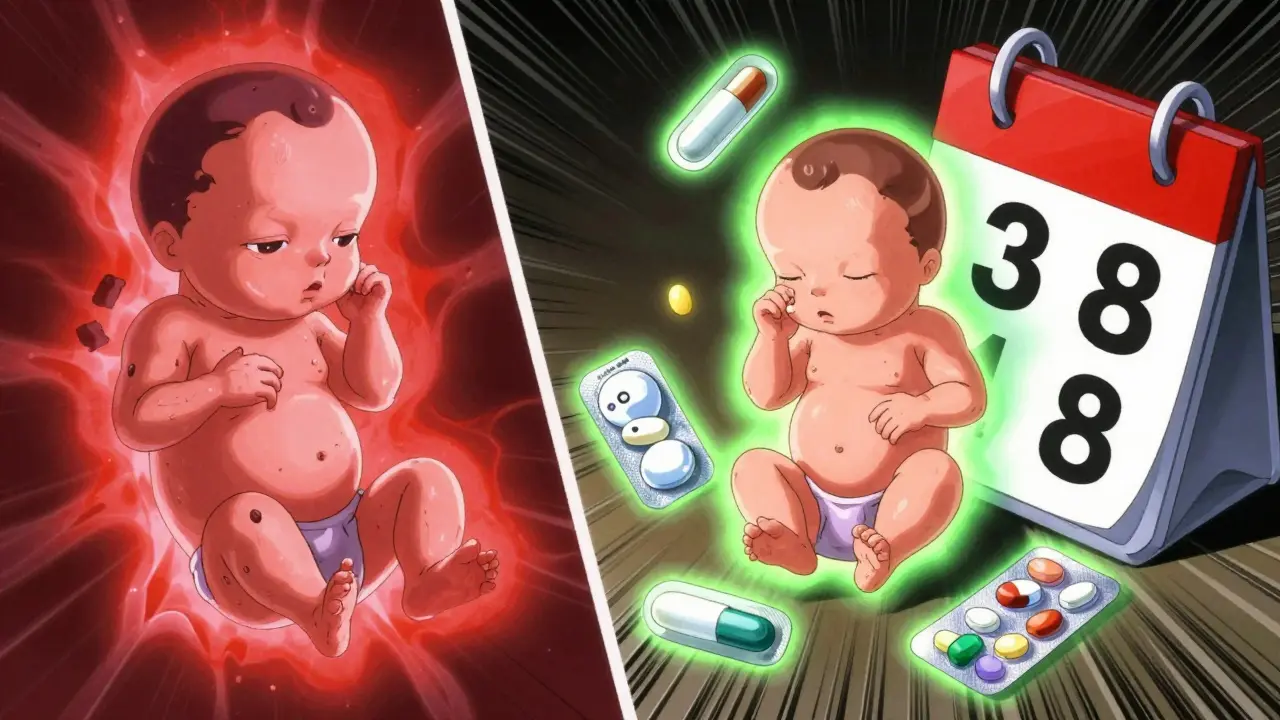
The first trimester runs from conception to week 12. But the real danger zone? Weeks 3 to 8. That’s when your baby’s organs are forming. The heart, brain, spine, limbs, eyes, ears-all of it happens in less than two months. This process is called embryogenesis, and it’s incredibly sensitive to outside chemicals.Think of it like building a house. If you’re laying the foundation and someone dumps the wrong kind of cement on the site, the whole structure could be ruined. That’s what happens with certain medications during this time. The baby doesn’t have a fully developed liver or placenta to filter out toxins yet. So anything you take-prescription, over-the-counter, or even herbal-can reach the embryo directly.
According to the CDC, 90% of major birth defects happen during this period. Neural tube defects like spina bifida form between days 18 and 26. The heart develops between days 20 and 40. Limbs take shape between days 24 and 36. Miss those windows, and the damage is permanent.
What Medications Are Actually Risky?
Not every drug is dangerous, but many common ones are. Here’s what the data shows:- Acetaminophen (Tylenol): Still the go-to for pain and fever, with a recommended max of 4,000 mg per day. But recent studies suggest prolonged use may raise the risk of ADHD by 30% and autism spectrum disorder by 20%. It’s not a clear yes/no-it’s a trade-off between treating your symptoms and potential long-term effects.
- NSAIDs (ibuprofen, naproxen, aspirin): These aren’t just risky after 20 weeks. A 2011 Canadian study of nearly 5,000 pregnancies found first-trimester use increased miscarriage risk by 60%. Even low doses matter.
- Isotretinoin (Accutane): This acne drug is a known monster. It carries a 20-35% chance of causing major birth defects-cleft palate, heart problems, brain malformations-and up to a 60% risk of cognitive issues. If you’re on this, you need to stop at least one month before trying to conceive.
- Paroxetine (Paxil): Among antidepressants, this one stands out. Studies show it nearly doubles the risk of heart defects like ventricular septal defects. Other SSRIs like sertraline and fluoxetine don’t show the same pattern, but they still carry risks for newborn withdrawal symptoms.
- Pseudoephedrine (Sudafed): Common for congestion, but linked to a 1.2-1.3 times higher risk of gastroschisis-a rare abdominal wall defect. Avoid it in the first trimester.
- Tetracycline antibiotics: These can permanently stain your baby’s teeth and affect bone growth. They’re off-limits after week 15, but why risk it at all?
What’s Actually Safe?
The good news? Many medications are considered low-risk. But “low-risk” doesn’t mean “no risk.” It means the data doesn’t show a clear pattern of harm-and that’s a big difference.- Amoxicillin: This antibiotic is used by over 3% of pregnant women. Studies show no increase in birth defects. It’s one of the safest choices for infections.
- Levothyroxine: If you have hypothyroidism, stopping this can lead to miscarriage, preterm birth, or developmental delays. Doses often need to be increased by 25-50% during pregnancy. Not taking it is far more dangerous than taking it.
- Diphenhydramine (Benadryl), loratadine (Claritin), cetirizine (Zyrtec): These antihistamines are generally considered safe for allergies and nausea. Avoid combination products with decongestants.
- Famotidine (Pepcid): Used for heartburn. Animal studies show no harm, but human data is limited. Many OB-GYNs still recommend it because acid reflux can be debilitating.
- Topical clotrimazole: For yeast infections. Oral fluconazole is riskier, but the cream? Safe.
The Bigger Problem: We Don’t Know Enough
Here’s the scary part: 98% of prescription drug labels don’t have enough data to tell you if they’re safe in pregnancy. Only 10% of FDA-approved medications have solid evidence on fetal risk. That’s not a failure of doctors-it’s a failure of the system.Drug companies aren’t required to test medications on pregnant women. So we’re left guessing. A 2023 report from MotherToBaby found that 42% of pregnant people have stopped taking necessary medications because they were scared-even when their doctor said it was okay. Meanwhile, 31% got conflicting advice from different providers.
Dr. Christina Chambers at UC San Diego calls this a “prescription information desert.” You’re walking through a minefield with no map.
What Should You Do?
You don’t need to panic. You need a plan.- Know your dates. Use your last period and an early ultrasound to pinpoint exactly when you conceived. That tells you what stage your baby is in.
- Don’t stop meds cold. If you’re on medication for epilepsy, diabetes, high blood pressure, or depression, stopping suddenly can be more dangerous than continuing. Seizures during pregnancy raise fetal death risk by 400%. Uncontrolled diabetes increases birth defect risk from 2-3% to 10-15%.
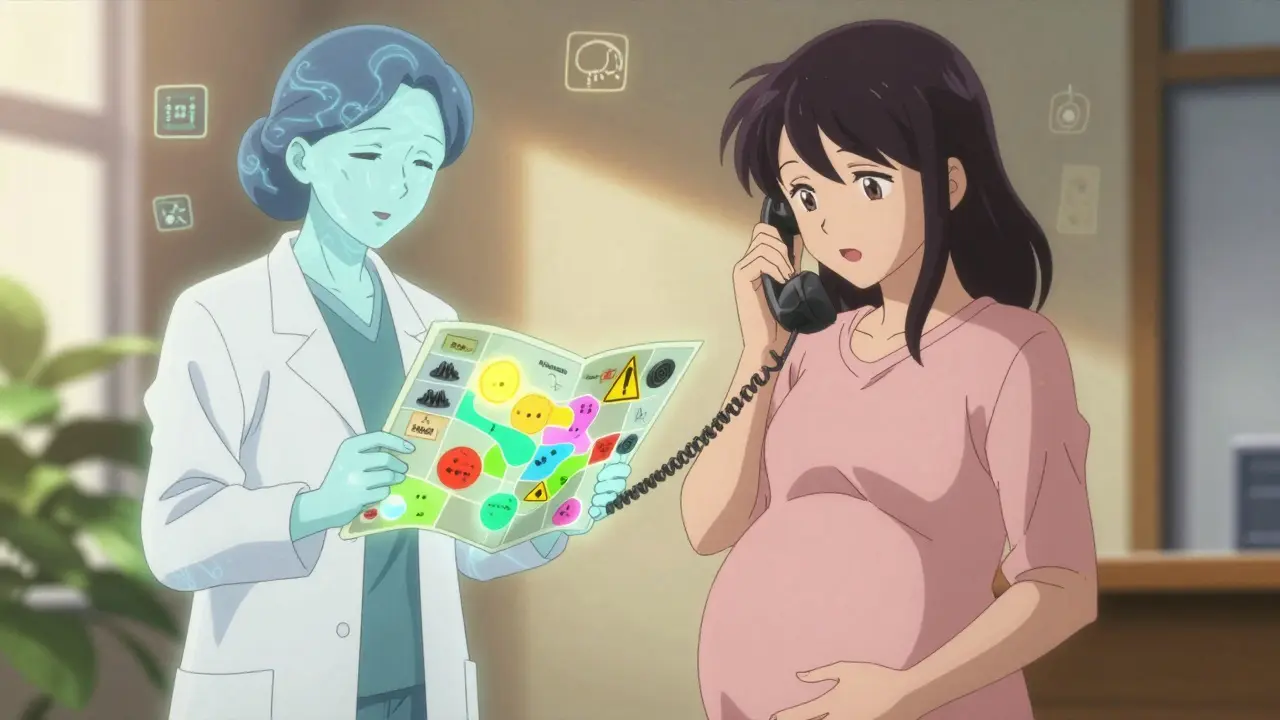
- Check with MotherToBaby. They’re a free, confidential service staffed by teratology specialists. Call them. Text them. Use their website. They answer over 15,000 questions a year from people just like you.
- Use the lowest dose for the shortest time. Even safe meds should be used sparingly. Don’t take acetaminophen every day unless you need it.
- Ask about alternatives. Can you manage nausea with ginger or acupressure? Can you treat a UTI with cranberry and hydration before jumping to antibiotics?
When in Doubt, Talk to Someone Who Knows
Your OB-GYN might not have all the answers. That’s okay. You don’t have to be your own pharmacist.There’s a difference between “I’ve never heard of a problem” and “Here’s what the data says.” The American College of Obstetricians and Gynecologists recommends using the Teratology Information System (TERIS) or MotherToBaby for evidence-based answers-not Google, not Reddit, not your aunt’s story from 1998.
And if you’re taking more than four medications during pregnancy? That’s not unusual. Half of pregnant women do. But it’s also a red flag. Review every pill with your provider. Are they all still necessary? Could one be swapped for a safer option?
The Bottom Line
The first trimester isn’t the time to guess. It’s the time to be informed. You’re not being paranoid by asking questions-you’re being responsible.Some risks are real. Some are exaggerated. Some are unknown. But one thing is certain: silence won’t protect your baby. Knowledge will.
If you’re pregnant and taking any medication-prescription, OTC, or supplement-reach out to MotherToBaby today. They don’t judge. They don’t push. They just give you the facts. And in a world full of noise, that’s the most valuable thing you can get.
Kelly McRainey Moore
January 20, 2026 AT 08:15Wow, this post really put into words everything I was nervously googling at 3 a.m. last week. I took ibuprofen for a migraine before I knew I was pregnant-now I’m stuck in this loop of ‘was that it?’ But honestly? The part about MotherToBaby made me breathe again. I just called them. They didn’t judge. Just gave me data. Feels like a lifeline.
Also, can we talk about how wild it is that we’re expected to be pharmacists while also being emotionally exhausted? No wonder so many of us just stop meds cold. Scared is an understatement.
Yuri Hyuga
January 22, 2026 AT 06:14👏 This is the kind of clarity we need in a world drowning in fear-mongering and half-baked Instagram advice. 🌱
Every pregnant person deserves access to teratology specialists-not Google’s algorithm. The fact that 98% of drug labels lack solid data is a systemic scandal. Pharma prioritizes profit over prenatal safety, and regulators look away. We must demand better. Research funding. Mandatory pregnancy trials. Ethical oversight.
And yes-acetaminophen isn’t innocent. But neither is untreated fever. Balance isn’t perfection. It’s informed choice. Thank you for being the voice of reason. 💪🧠
Coral Bosley
January 24, 2026 AT 00:23I took Accutane for two years before I got pregnant. I didn’t know. I thought it was just acne. Now my daughter has a cleft palate and a heart murmur and I can’t look at her without seeing the ghost of that prescription bottle. They didn’t warn me. Nobody warned me. I didn’t even know it was a pregnancy category X drug until I was six months in. I’m not angry at myself. I’m furious at the system. And I’ll never stop screaming about this.
You think you’re just taking a pill. Until you’re holding the broken pieces of what it did to your child.
MAHENDRA MEGHWAL
January 24, 2026 AT 19:59This is an exceptionally well-researched and compassionate overview of a deeply neglected area of medical ethics. The statistical data presented is both sobering and indispensable. It is imperative that healthcare systems globally prioritize maternal-fetal pharmacovigilance. The absence of rigorous clinical trials involving pregnant populations constitutes a profound ethical lapse in biomedical research.
I commend the author for directing readers to MotherToBaby-an institution whose work exemplifies the highest standards of evidence-based maternal care. May this post reach every obstetric clinic, every pharmacy, and every expectant mother in need of clarity.
Sangeeta Isaac
January 26, 2026 AT 08:15so like… i took benadryl for sleep every night for 3 months. and then i took tylenol for a headache every other day. and then i took some random herbal tea because ‘it’s natural’ (lol).
now i’m just waiting for my kid to come out with three eyes and a craving for pickles and ice cream.
but honestly? i’m not even mad. i’m just… tired. why is being pregnant like playing russian roulette with a pharmacy shelf?
also, why does no one ever tell you that ‘safe’ doesn’t mean ‘risk-free’? it’s like being told ‘this gun has a 1% chance of firing’ and then you’re like… cool, i’ll hold it anyway.
Alex Carletti Gouvea
January 26, 2026 AT 09:05First world problems. Back in my day, women took whatever they needed and raised healthy kids. No apps, no specialists, no ‘is this safe?’ nonsense. You didn’t need a PhD to know that aspirin was bad. You just knew. Now we’ve turned pregnancy into a minefield of anxiety and corporate liability. Stop over-medicalizing motherhood.
And for the love of God, stop reading Reddit for medical advice. Go talk to your doctor. Not some guy in a comment section with a 3.2 GPA.
Philip Williams
January 27, 2026 AT 14:48Thank you for the meticulous breakdown. The distinction between ‘low-risk’ and ‘no-risk’ is critical and often misunderstood. I’m a medical researcher, and I’m deeply concerned by the lack of longitudinal data on prenatal exposures. We have decades of data on adult populations, but fetal exposure remains a black box.
One addition: recent cohort studies suggest that even short-term, low-dose NSAID exposure during weeks 6–8 may affect fetal prostaglandin pathways, potentially influencing cardiac development. This is not yet in mainstream guidelines, but it’s emerging in peer-reviewed literature. Further study is needed-but caution is warranted.
Ben McKibbin
January 28, 2026 AT 13:11I read this while holding my 10-week ultrasound photo. I cried-not because I’m scared, but because I finally feel seen. I’ve been on sertraline for 8 years. My doctor said ‘it’s probably fine.’ But ‘probably’ isn’t enough when you’re building a human.
So I called MotherToBaby. They walked me through the data: sertraline has a 1.4% risk of cardiac defects vs. 1% baseline. That’s not zero. But stopping? That’s a 40% chance of relapse. I’m not choosing between safety and risk. I’m choosing between two kinds of risk-and I’m not alone.
This post didn’t give me answers. It gave me the tools to ask better questions. And that’s everything.
Uju Megafu
January 30, 2026 AT 13:10Oh, so now we’re supposed to be terrified of every pill, every tea, every sneeze? You’re telling me I can’t even take a cold medicine without potentially turning my baby into a lab experiment? And what about all the women who didn’t have access to ultrasounds or teratology specialists? Are their kids just ‘collateral damage’?
Let’s be real-this isn’t about safety. It’s about control. Corporations, doctors, and now Reddit influencers are all selling fear like it’s a subscription service. You’re not protecting your baby-you’re buying into a fear-based economy.
And if you’re still taking meds after reading this? You’re not responsible. You’re brainwashed.